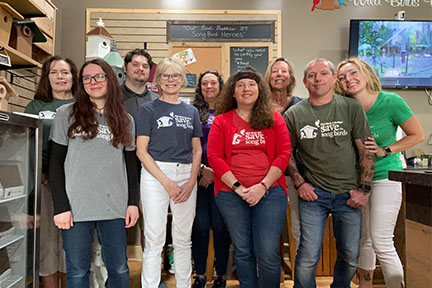
We’re passionate about birds and nature. That’s why we opened a Wild Birds Unlimited Nature Shop in our community.
620 Hilltop West Shopping Ctr.
Virginia Beach, VA 23451
Phone: (757) 422-3215
Fax: (757) 422-3584
Email: Send Message
Store Hours:
Mon - Fri: 10:00 am - 6:00 pm
Sat: 9:30 am - 6:00 pm
Sun: Closed
Greenbrier Marketctr. - Ste 570,
1244 Greenbrier Parkway
Chesapeake, VA 23320
Phone: (757) 436-4472
Fax: (757) 422-3584
Email: Send Message
Store Hours:
Mon - Fri: 10:00 am - 6:00 pm
Sat: 9:30 am - 6:00 pm
Sun: Closed
As the last pale rays of the winter sun disappear, the activity at our birdfeeders comes to an abrupt halt. Did you ever wonder where these daily visitors go at night to be warm and safe?
Many head for the woodlot and perch in leafy bushes, evergreens or vines for the night. Dense brush piles in your yard can protect birds from night predators such as cats. Birds also need this protection from the wind. Swallows retreat to beams in barns. Starlings and pigeons roost under bridges. Ducks often sleep while floating. Woodpeckers can hook their claws into tree bark or retreat into holes to sleep. Chickadees and titmice also roost in tree holes for safety and warmth.
Warm shelters help, but when the temperature drops below zero, sleeping birds need bellies full of high calorie foods to keep their little bodies warm. So remember on bitter cold days, you should definitely have your feeders full of seed the last few hours of daylight. Also, those little birds wake up hungry! Oil-type sunflower, safflower, suet, and thistle seed are the highest calorie foods you can provide.
Many birds have a special muscle in each leg that can lock the bird's feet to a branch. This keeps the bird from falling off while it sleeps! To unlock this tight grip, the bird needs only to stand up straight.